
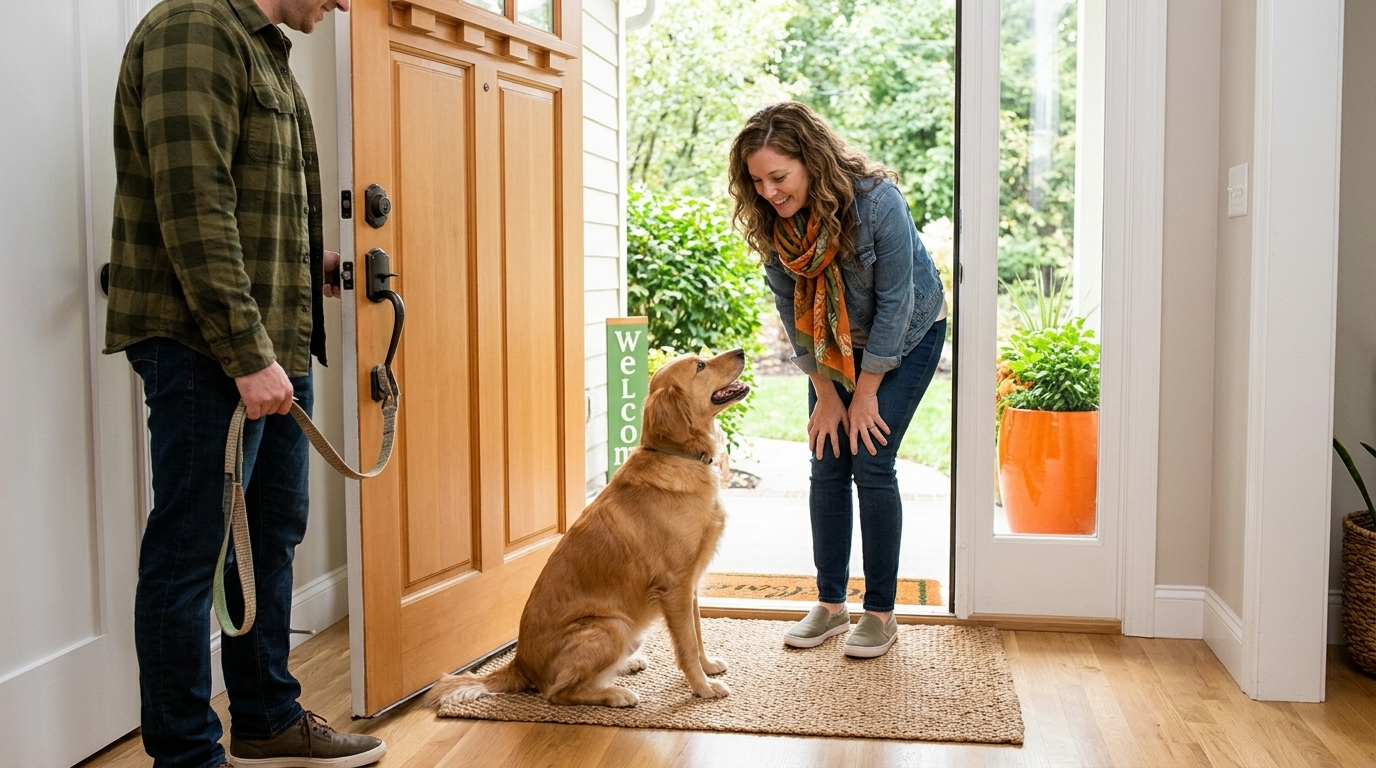
How to Stop a Dog From Jumping on People (Without Yelling or Kneeing)
Summarize with AI
On this page 3 sections
What You Need To Know
- Dogs jump to greet you and to get attention, so every touch, shove, or “off!” pays them for it.
- Take the payoff away: turn your back, go still, and wait for four paws on the floor.
- Teach a replacement greeting, like a sit or “four on the floor,” and reward it before the jump happens.
- Manage the moments you can’t train yet with a leash, a baby gate, or a crate.
- Put everyone on the same rules. One person who allows jumping keeps the habit alive.
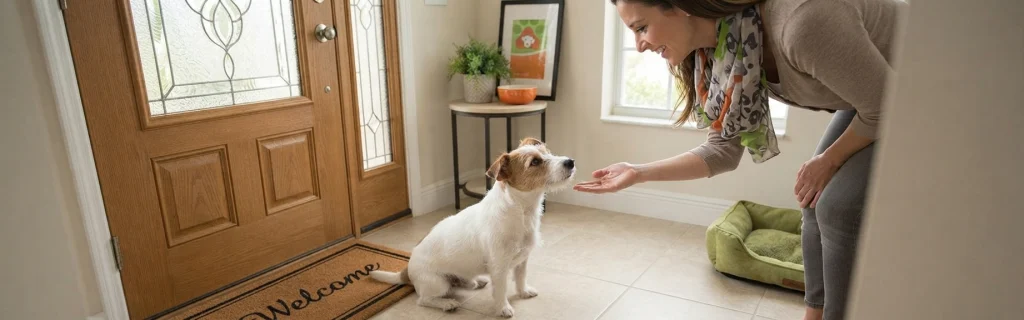
Short answer: To stop a dog from jumping on people, stop rewarding the jump with attention, teach a polite greeting like a sit, and reward that greeting before your dog has a chance to jump. Use a leash or gate during visits while the new habit forms.
Learning how to stop a dog from jumping on people is mostly about learning what your dog gets out of it. The jumping behavior isn’t rude. It’s a greeting that keeps working.
I’d skip the “off!” command entirely at first. Here’s why: shouting is attention, and attention is exactly what your jumper wants. The method below works on puppies and older dogs alike.
Why do dogs jump on people in the first place?
Dogs jump on people to get closer to a human face, and because jumping almost always gets a reaction. Puppies greet their mother by licking her mouth, and your face is a long way up from the floor.
Then the habit gets fed. Somebody laughs, somebody pets, somebody pushes the dog off with both hands, which feels a lot like play.
Think of jumping like a slot machine. If it paid out even once in ten pulls, you’d keep pulling. One relative who says “oh, I don’t mind” is that payout, which is why consistency beats any single technique.
Why does the “jump, then sit” routine make it worse?
A behavior chain is a sequence your dog learns as one package, where only the last step gets rewarded. Here’s how it goes wrong: the dog jumps, you say “sit,” the dog sits, and you hand over a treat.
You think you rewarded the sit. Your dog learned that the recipe for a cookie is jump first, then sit. It’s like a kid who learns that whining and then saying “please” gets the candy.
The fix is timing. Ask for the sit and reward it before the jump, while your dog is still on the way toward the person.
How do you stop a dog from jumping on people, step by step?
Remove the payoff for jumping and pay for a better greeting instead. This is positive reinforcement (rewarding the behavior you want so it happens more often).
- Freeze the reward. When your dog jumps, turn sideways, fold your arms, and look away. No talking, no pushing.
- Mark four paws on the floor. The second all four paws land, say “yes” and reward with a treat or calm praise.
- Teach a solid sit in a quiet room. Practice it several times a day before you need it at the door.
- Pick one greeting behavior. A sit or “four on the floor” (standing or wiggling, paws down) both work. A dog can’t sit and jump at once, which is why trainers call a sit an incompatible behavior.
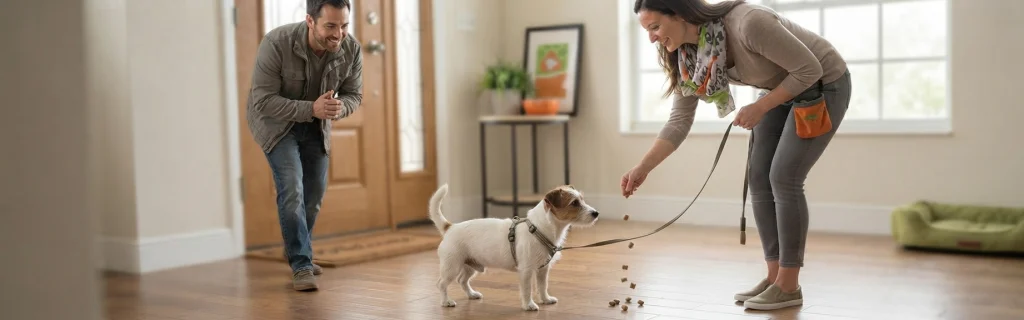
- Reward early, then fade the treats. Toss treats to the floor as a person approaches. Over time, let the petting itself become the reward.
- Practice with helpers. Have a friend walk up while your dog is leashed. If the dog stands, the friend turns away and tries again.
The American Kennel Club’s four on the floor method uses the same idea: feed on the floor so your dog’s nose points down instead of up.
Some dogs jump because they have more energy than their day uses up. After eight hours home alone, the front door is the most exciting thing that happens.
Supervised playgroups at dog daycare in Brandon can take the edge off before the evening greeting. That makes practice at home much easier.
One regular daycare dog at The Dog Patch used to get overly excited and jump on other dogs whenever they arrived. With consistent daycare visits and gentle guidance from staff, the dog gradually learned to greet other dogs more calmly. Over time, greetings became friendlier, and the dog showed better social behavior during playtime.
How do you stop a dog from jumping on guests at the door?
Stop a dog from jumping on guests by managing the door until the new greeting is reliable. The doorbell, voices, and new smells all hit at once.
- Leash before you open the door. Step on the leash so your dog can’t reach a chest.
- Use a baby gate or crate. Let your dog say hello through the gate once things calm down.
- Brief your guests. Ask them to ignore the dog until it’s sitting.
- Keep treats by the door. A jar on a shelf means you’re never caught empty-handed.
Humane World for Animals gives the same advice in its guide to stopping jumping up: manage first, then teach a sit that earns the greeting.
What works in each jumping situation?
The method stays the same, but the setup changes depending on where the jump happens:
| Situation | What to do | What to avoid |
|---|---|---|
| You come home | Walk in calmly, wait for four paws down, then greet | Excited baby talk at the door |
| Guests at the door | Leash or gate first, sit before any petting | Letting guests “just say hi” mid-jump |
| Strangers on walks | Ask them to wait until your dog sits, or give a wide berth | Letting strangers reward jumping |
| You’re on the couch | Stand up, go still, sit back down when paws are down | Pushing the dog away |
| Kids or older adults | Keep the dog leashed or gated every time | Any unsupervised greeting |
A dog jumping on strangers is the hardest version to fix, because you can’t control how strangers react. Early on, I’d skip stranger greetings and practice with friends who follow the rules.
Why does jumping matter so much for kids and older adults?
A jumping dog can knock someone down. A CDC study published in March 2009 estimated about 86,600 emergency visits a year for falls involving dogs and cats, using data from 2001 to 2006.
The full report is in the CDC’s Morbidity and Mortality Weekly Report.
The CDC’s summary of that study found about 21 percent of dog-related falls happened after a person was pushed or pulled by a dog.
The data is old, but a large dog’s paws on a grandparent’s chest is still a real risk.
What should you never do when your dog jumps?
Never knee, hit, step on toes, or yell at a dog for jumping. These either read as play or teach your dog that people are unpredictable.
- Kneeing the chest can injure the dog and teaches no replacement greeting.
- Pushing away with your hands feels like a game to most dogs.
- Shouting “down!” is still attention, and attention is the payoff.
- Shock, choke, or prong collars add fear to the greeting.
The American Veterinary Society of Animal Behavior (AVSAB) found no evidence that aversive methods beat reward-based ones in any context. That’s from its 2021 position statement on humane dog training.
When should you call a trainer?
Call a professional when jumping comes with a stiff body, hard stare, raised hackles, or nipping. That’s not a happy greeting anymore.
My guide to what your dog’s body language is telling you covers those signals. A certified trainer also makes sense if you’ve been consistent for a month and nothing has changed.
Frequently asked questions
How long does it take to stop a dog from jumping?
Most dogs show progress within a few weeks of consistent practice, but there’s no fixed timeline. A young dog with a short jumping history changes faster than an adult who has been rewarded for years. The biggest factor is whether every person in the house follows the same rules every time.
How do I stop a puppy from jumping on people?
Start now, before the habit grows with the dog. Greet your puppy only when all four paws are down, and ask visitors to do the same. Puppy jumping is easier to fix because there’s less history to undo.
Pair it with early exposure from my guide on how to socialize a puppy, so new people feel normal rather than thrilling.
Why does my dog only jump on certain people?
Usually because those people reward it. Anyone who laughs, squeals, or pets mid-jump becomes the slot machine that pays. Dogs also jump more on people they rarely see, because the excitement is higher. A dog that jumps on strangers while looking tense may be anxious rather than friendly.
The bottom line
- Jumping is a greeting that keeps getting rewarded.
- Remove the reward, teach a sit, and pay for it before the jump.
- Manage doors and visits with a leash, gate, or crate.
- Skip punishment; reward-based training is what the evidence supports.
- Consistency from every person is what ends the habit.
If energy is the real problem, mental stimulation from daycare can help as much as any drill.
Wondering if your dog is a good fit for playgroups? Get in touch with The Dog Patch and ask about an evaluation.
Share this article

From the blog
Keep reading
How to Introduce Dogs to Each Other: A Safe Step-by-Step Plan
Learn how to introduce dogs safely: neutral ground, the parallel walk, home setup, puppy tips, warning signs, and a realistic timeline from…
Dog Body Language: What Your Dog Is Trying to Tell You
Learn dog body language: tail wags, ear positions, whale eye, calming signals, and stress signs, plus a free chart. From a Brandon,…
How to Socialize a Puppy: A Step-by-Step Guide
What You Need to Know Puppy socialization means giving your puppy safe, positive experiences with people, dogs, sounds, surfaces, and handling while…