

How to Socialize a Puppy: A Step-by-Step Guide
Summarize with AI
On this page 10 sections
- What is puppy socialization, really?
- When to start socializing with a puppy?
- Is puppy socialization before vaccines safe?
- How to socialize a puppy, step by step
- How do you socialize a shy puppy?
- What happens during a puppy fear period?
- Your puppy socialization checklist
- Which socialization mistakes cause the most problems?
- Puppy socialization FAQs
- The bottom line
What You Need to Know
- Puppy socialization means giving your puppy safe, positive experiences with people, dogs, sounds, surfaces, and handling while their brain is most open to new things.
- The puppy socialization window runs from about 3 weeks to 12 to 16 weeks of age, so start the day your puppy comes home.
- Veterinary behaviorists say socialization should start before vaccines are finished. Carry your puppy in public, skip dog parks, and meet only healthy, vaccinated dogs.
- Go at your puppy’s pace. One calm, rewarded experience beats ten overwhelming ones.
- Keep it going through adolescence. Socialization isn’t a one-month project.
Learning how to socialize a puppy is the most useful thing you can do in your first month together. Puppy socialization shapes how your dog reacts to strangers, other dogs, the vet, and the noise of everyday life for years to come.
Here’s my honest take: most new owners wait too long. They hear “keep the puppy home until the last shot,” and by the time that shot lands, the easiest learning window has mostly closed. I’d start on day one, carefully. If you’re still gathering supplies, pair this guide with my new puppy checklist.
Short answer: To socialize a puppy, expose them to a wide variety of people, dogs, places, sounds, and handling between about 3 and 16 weeks of age. Keep every experience short and rewarded with treats, let your puppy watch from a distance first, and stop before fear sets in.
What is puppy socialization, really?
Puppy socialization is the process of teaching a young dog that people, animals, sights, and sounds are safe and normal. It isn’t about meeting everyone. It’s about building good associations.
Think of it as a vaccine for the mind. A small, controlled dose of something new (a skateboard rolling past, a man in a hat) teaches the puppy’s brain that this is fine, so the full-size version later doesn’t trigger panic.
The stakes are real. The American Veterinary Society of Animal Behavior (AVSAB) states that behavior problems, not infectious disease, are the leading cause of death in dogs under three.
AVSAB, a group of veterinarians who specialize in behavior, also names behavior problems as the top reason dogs are surrendered to shelters.
When to start socializing with a puppy?
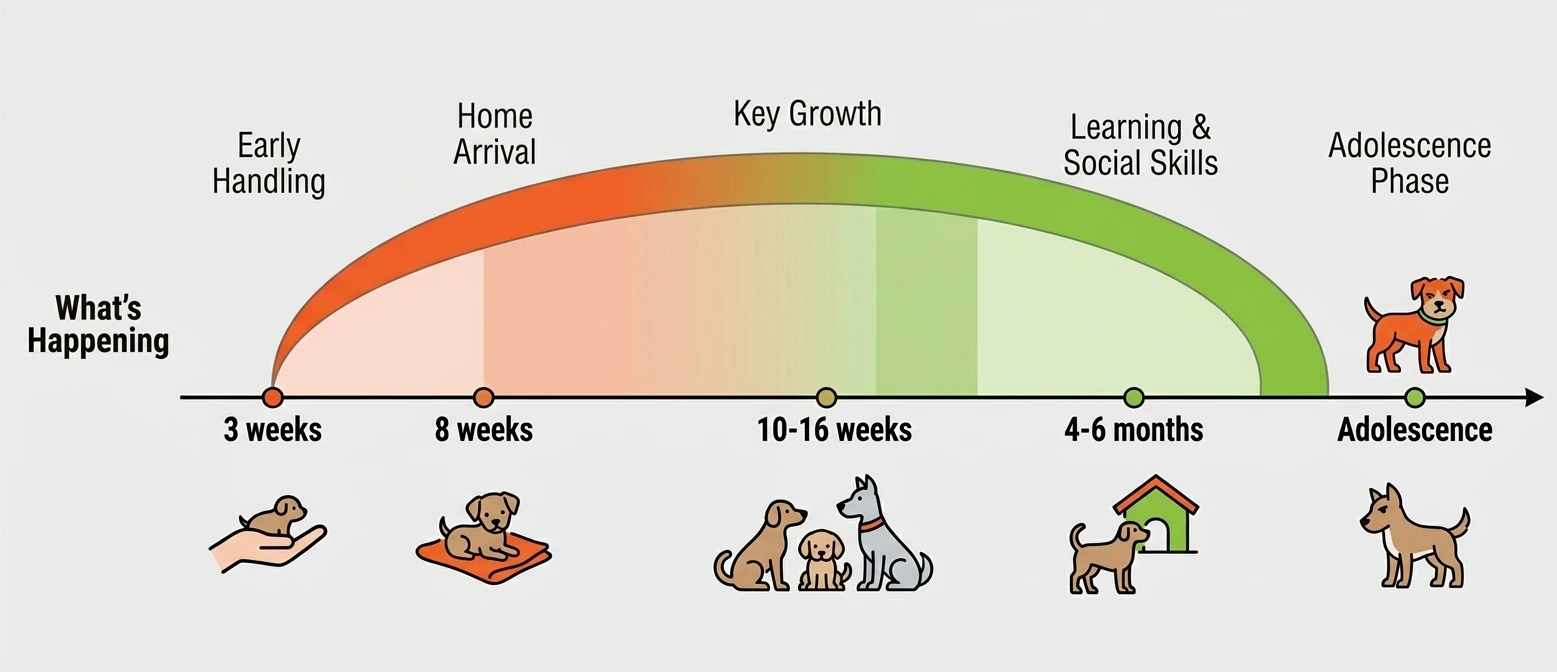
Start socializing your puppy the day they come home, usually around 8 weeks. Good breeders and shelters begin even earlier, with gentle handling in the first weeks of life.
The reason is the puppy socialization window, which researchers call the sensitive period.
According to Purdue University’s Center for Canine Welfare, it opens at roughly 3 weeks and lasts until about 12 to 16 weeks.
During that stretch, curiosity outweighs fear, so new things get filed under “safe” with little effort.
After the sensitive period, learning still happens. It just takes more time. Picture wet cement: easy to shape early, much harder once it sets.
| Age | What’s happening | Your focus |
|---|---|---|
| 3 to 7 weeks | Still with the litter; the sensitive period opens | Breeder handling, household sounds, littermate play |
| 8 to 10 weeks | Comes home; the first fear period often starts near 8 weeks | Calm introductions, daily handling, carried outings |
| 10 to 16 weeks | Window still open but narrowing | More people, puppy classes, careful dog meetings |
| 4 to 6 months | Window closed; learning continues | Regular outings, revisit anything that went badly |
| Adolescence | Some dogs go through a second fearful phase | Patience, no forcing, steady exposure |
Is puppy socialization before vaccines safe?
Yes, with sensible limits. AVSAB’s position is that puppies should be socialized before they’re fully vaccinated. Its reasoning: maternal immunity, early vaccines, and careful choices keep infection risk small compared with the risk of a lifelong behavior problem.
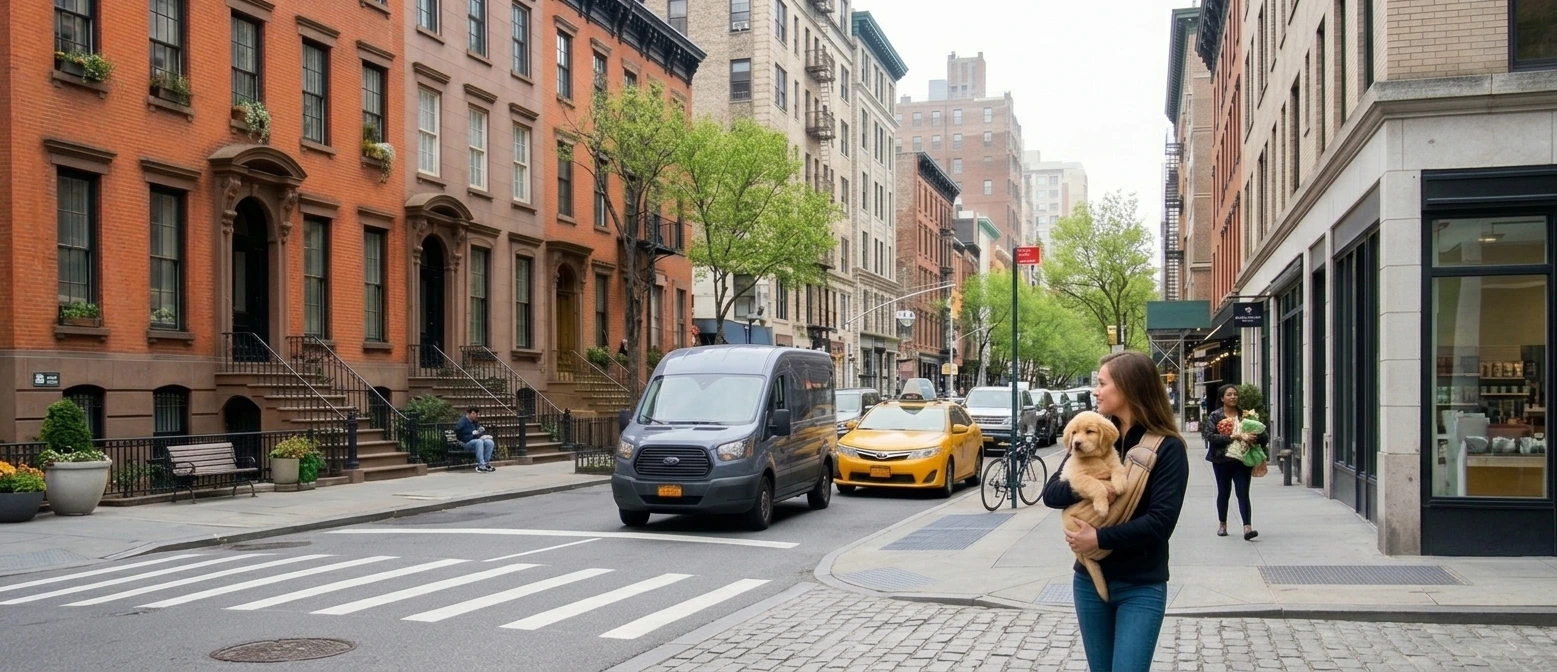
That doesn’t mean anything goes. Parvovirus (a contagious virus that hits young puppies hardest) is the main reason vets urge caution. Where you take your puppy matters far more than whether you go out at all.
How the puppy vaccination schedule fits in
The American Animal Hospital Association (AAHA) 2022 guidelines call for at least three doses of a combination core vaccine between 6 and 16 weeks, given 2 to 4 weeks apart.
In areas with high parvovirus risk, the Animal Medical Center notes that AAHA advises a final puppy dose at 18 to 20 weeks.
So the puppy vaccination schedule finishes after the socialization window has largely closed. That overlap is the whole dilemma. Socialize now and manage the risk, rather than wait and lose the window. Your vet knows the disease picture where you live, so ask which places are safe.
| Safer now | Wait until your vet clears it |
|---|---|
| Being carried through stores, sidewalks, and parks | Dog parks |
| Sitting on a blanket at a café patio or park bench | Rest stops and other spots with heavy traffic from unknown dogs |
| Your home, your yard, and friends’ homes with vaccinated dogs | Greeting unknown dogs on walks |
| Puppy classes that check vaccines and clean their floors | Beaches and trails where many unknown dogs pass |
How to socialize a puppy, step by step
These seven steps build on each other. Start with the first two at home, then widen your puppy’s world one layer at a time.
Step 1: Start at home with gentle handling
Touch paws, ears, mouth, tail, and the collar area every day, pairing each touch with a small treat. AVSAB recommends puppies learn to accept handling of every body part.
This pays off at every vet visit and nail trim for the rest of your dog’s life. Keep sessions under a minute and stop while your puppy still enjoys it.
Step 2: Use positive reinforcement for every new thing
Positive reinforcement means rewarding behavior you like with something your puppy values, so they want to repeat it. In socialization, the reward makes a new thing mean good stuff happens here.
Carry pea-sized treats on every outing. A new person appears: treat. A truck rumbles by: treat. AVSAB notes that reward-based training is linked to fewer behavior problems than methods built on punishment.
Step 3: Introduce people one at a time
Start with calm adults, then widen the circle: men with beards, people in hats and sunglasses, kids, someone using a cane or wheelchair. Let your puppy approach, and don’t let strangers scoop them up.
My favorite rule is simple: the puppy says hello first. If they hang back, have the visitor toss a treat and look away. Puppies warm up faster when nobody stares at them. Learning how to read your puppy’s body language makes this step much easier.
Step 4: Bring the world to your puppy
Sounds and surfaces matter as much as people. Play recordings of thunder, fireworks, sirens, and crying babies at low volume while your puppy eats. Walk them across tile, grass, gravel, metal grates, and wobbly cushions.
Watching counts too. Carry your puppy to the end of the driveway and watch traffic for five minutes. A puppy calmly observing a busy street from your arms is learning plenty.
Step 5: Socializing a puppy with other dogs
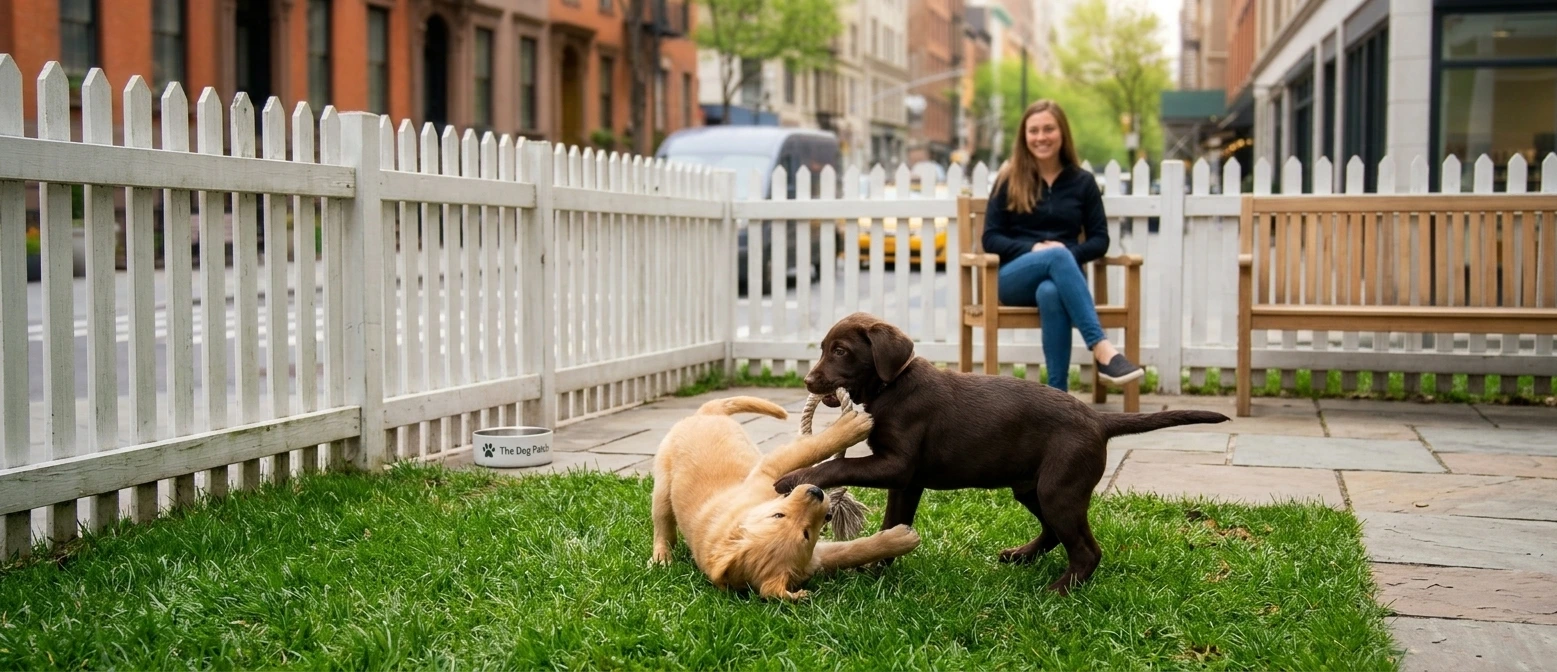
Socializing a puppy with other dogs works best one dog at a time, with friendly, healthy, fully vaccinated adults or puppies of a similar size. A calm older dog teaches manners no human can.
Set up puppy playdates in a clean yard and keep the first ones to 10 or 15 minutes. Good play is balanced, with both dogs taking turns chasing and being chased. If one keeps pinning the other, separate them for a breather.
Skip the dog park for now. Too many unknown dogs, too much chaos, and AVSAB specifically advises avoiding areas heavily used by dogs of unknown vaccination status.
Step 6: Enroll in puppy socialization classes
Puppy socialization classes give your puppy supervised play and new people in a cleaned, controlled space. Per AVSAB, puppies can start as early as 7 to 8 weeks, after at least one set of vaccines given 7 days before the first class, plus a first deworming.
Pick a class that uses reward-based methods and checks vaccine records at the door. Ask how they handle an overwhelmed puppy. A good instructor gives the shy pup a quiet corner, not a shove into the pile.
The Texas A&M College of Veterinary Medicine has also pointed to short puppy daycare sessions as another way for young dogs to play and learn together.
Want a hand? Supervised play with gentle, vaccinated dogs is one of the easiest ways to build puppy confidence. Ask about puppy days at The Dog Patch and I’ll walk you through how I introduce new puppies.
Step 7: Keep going after 16 weeks
The window closing isn’t the finish line. Socialization that stops at four months can fade. VCA Animal Hospitals notes some dogs hit a fear period in adolescence and become uneasy around things they used to accept.
Keep weekly outings going through the first year: car rides, elevators, new trails, and vet lobby visits just for treats.
How do you socialize a shy puppy?
To socialize a shy puppy, shrink the challenge until your puppy can succeed, then grow it slowly. Shyness isn’t a flaw to fix in a weekend. Some dogs are introverts, and that’s okay.
The two tools that work best are desensitization and counterconditioning. Desensitization means exposing your puppy to a trigger at a level so low they barely notice, then slowly turning it up. Counterconditioning pairs that trigger with something great, like chicken, so the feeling flips from worried to happy.
Say your puppy fears the vacuum. Start with it switched off across the room and treats on the floor nearby. Over several days, move it closer, then run it in another room. Never jump two steps at once.
- Give a safe retreat: a crate or bed in a quiet corner where nobody follows them.
- Let them choose: a puppy who can walk away feels braver about walking back.
- Reward brave moments: a single sniff toward a stranger earns a treat.
- Try one-on-one first: group settings can be too much, and one calm dog friend may work better.
If fear is intense or isn’t improving after a few weeks, talk to your vet. They can refer you to a board-certified veterinary behaviorist. Getting comfortable with a crate training routine also gives shy puppies a reliable safe spot.
What happens during a puppy fear period?
A puppy fear period is a short developmental phase when a bold puppy suddenly startles at things that never bothered them. Purdue’s Center for Canine Welfare places the first one at around 8 weeks and warns that traumatic experiences around 8 to 9 weeks can be especially harmful.
Timing varies by breed. A study in the Journal of Veterinary Behavior found Cavalier King Charles Spaniels started showing fear-related avoidance later than German Shepherd Dogs and Yorkshire Terriers.
That’s why the Croney Research Group at Purdue advises watching behavior rather than the calendar.
More hesitation and less exploring signal that the fear period has started.
Don’t stop socializing during this phase. Dial it down instead. Choose easy wins, keep distance generous, and postpone anything likely to frighten them, like a first grooming appointment.
Your puppy socialization checklist
Use this puppy socialization checklist as a menu, not a race. Aim for a few new things each day and note how your puppy reacted: loved it, unsure, or upset. Anything unsure or upset goes back on the list at an easier level.
| Category | Try exposing your puppy to |
|---|---|
| People | Men, women, kids, teens, older adults, beards, hats, sunglasses, hoodies, masks, uniforms, wheelchairs, canes |
| Dogs and animals | Calm vaccinated adult dogs, puppies of other sizes, cats, birds, livestock from a distance |
| Sounds | Doorbell, vacuum, hair dryer, thunder, fireworks, sirens, traffic, crying babies, kids playing |
| Surfaces | Tile, carpet, grass, gravel, sand, metal grates, stairs, wobbly boards, wet pavement |
| Places | Car, vet lobby, friend’s home, café patio, elevator, busy sidewalk (carried) |
| Handling | Paws, ears, mouth, tail, collar grabs, brushing, nail trims, being picked up, towel drying |
| Objects | Bikes, strollers, skateboards, shopping carts, rolling suitcases, balloons, umbrellas opening |
Want this on the fridge? Grab my printable puppy socialization checklist and tick items off as you go. It fits neatly alongside a puppy potty training plan, since both run on short daily routines.
Which socialization mistakes cause the most problems?
Most socialization problems come from doing too much, too soon, or stopping too early. Here’s how to swap each common mistake for a better habit.
| Common mistake | Better approach |
|---|---|
| Waiting until every shot is done | Start at 8 weeks with carried outings and known, vaccinated dogs |
| A big party in the first week | One new person at a time, short visits |
| Letting strangers grab or pick up the puppy | Puppy approaches first; visitors toss treats |
| Pushing a scared puppy closer | Add distance until they’ll take a treat, then rebuild |
| Dog park as the first dog meeting | Puppy playdates with dogs you know |
| Stopping at 4 months | New experiences every week through the first year |
I’ll be straight with you about one limit: this plan suits most healthy puppies. It isn’t a fix for a puppy that growls, snaps, or freezes in fear. That puppy needs a vet or a qualified behavior professional, and the sooner the better.
Puppy socialization FAQs
How long does it take to socialize a puppy?
The intensive stage covers the window from about 3 to 16 weeks, but socialization isn’t done then. VCA Animal Hospitals recommends socialization experiences at least twice a week until 16 weeks, then regular new experiences through the first year fit easily into a few minutes a day.
Can you socialize a puppy before the second vaccine?
Yes. AVSAB supports socialization before the vaccine series is complete. Before the second dose, carry your puppy in public, invite people over, and meet only healthy, vaccinated dogs you know. Avoid dog parks and other places busy with unknown dogs, and ask your vet how high the local disease risk is.
What if a puppy is already past 16 weeks?
You can still socialize an older puppy. Progress is slower because caution now competes with curiosity, so lean harder on distance, treats, and patience. Focus first on the situations your dog will face most, like visitors, walks, and vet trips. If you see real fear, involve your vet early rather than waiting.
Are puppy socialization classes worth it?
For most puppies, yes. A good class offers supervised play, new people, and new surfaces in a cleaned space, plus basic training. AVSAB notes that classes before three months can improve training and strengthen your bond. Choose reward-based classes that check vaccines, and keep socializing outside class, since many meet only once a week.
How can you tell if a puppy is overwhelmed?
Watch for a tucked tail, pinned-back ears, lip licking, yawning, looking away, freezing, trembling, or refusing treats. A puppy who suddenly won’t eat is usually past their limit. When you see these signs, calmly add distance or end the session, then try an easier version another day.
Is doggy daycare good for puppy socialization?
It can be, if the daycare separates puppies from rough adult play, checks vaccines, and keeps early sessions short. Texas A&M’s veterinary college has mentioned puppy daycare as one socialization outlet. Visit first, ask how staff read stress signals, and start with a half day. A shy puppy may do better in a small group.
The bottom line
- Start the day your puppy comes home, around 8 weeks.
- Socialize before vaccines finish, but skip dog parks and unknown dogs.
- Introduce one new thing at a time, always paired with a treat.
- Read body language and back off before fear builds.
- Keep it going through the first year.
Socialization is a lot of small, ordinary moments stacked together. If you’d like a partner in it, see how The Dog Patch welcomes new puppies.
Share this article

From the blog
Keep reading
Dog Body Language: What Your Dog Is Trying to Tell You
Learn dog body language: tail wags, ear positions, whale eye, calming signals, and stress signs, plus a free chart. From a Brandon,…

Florida Plants Toxic to Dogs: What Every Pet Owner Should Know
What you need to know: Florida plants toxic to dogs are not rare backyard oddities. They line driveways in Brandon, fill medians…
Dog Afraid of Thunderstorms? How to Calm Storm Anxiety in Dogs
Florida weather can change quickly, bringing dark skies, heavy rain, strong winds, lightning, and loud thunder. While some dogs remain relaxed during…