
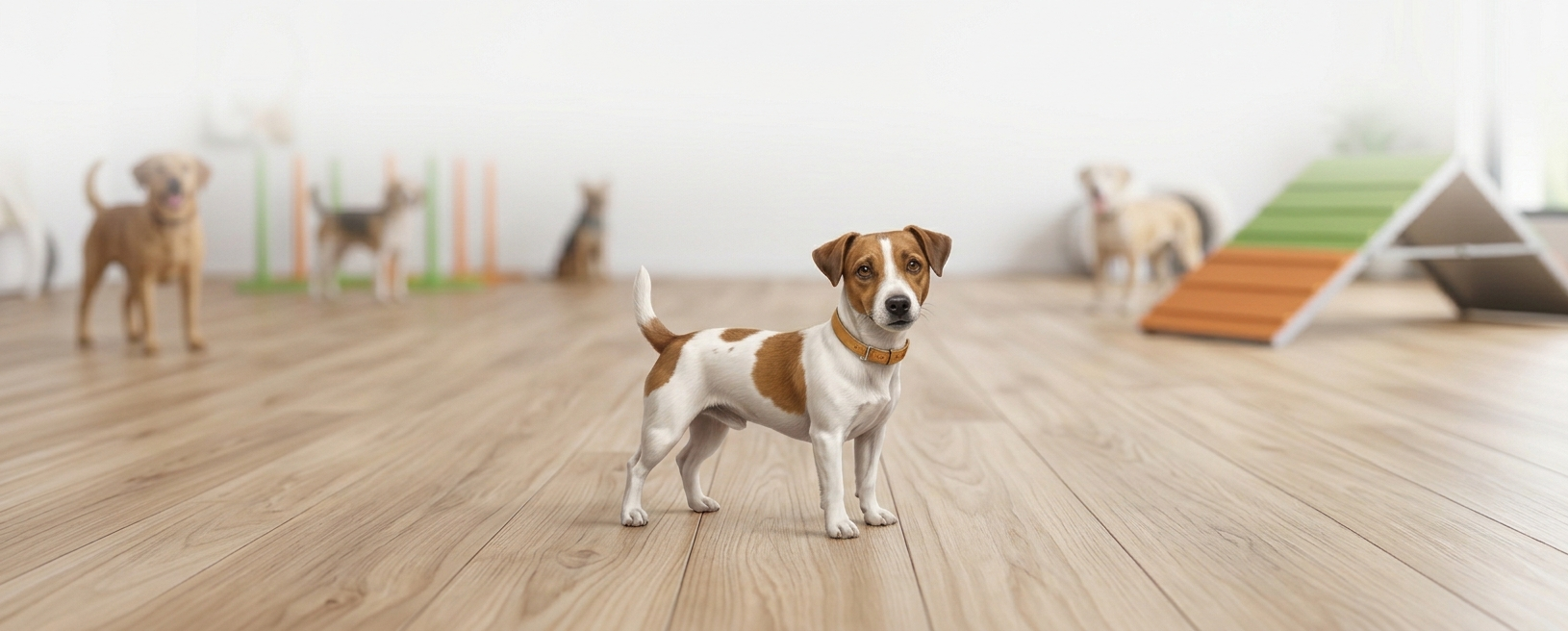
Dog Body Language: What Your Dog Is Trying to Tell You
Learn dog body language: tail wags, ear positions, whale eye, calming signals, and stress signs, plus a free chart. From a Brandon, FL daycare owner.
Summarize with AI
On this page 13 sections
- What You Need to Know:
- How do you read dog body language correctly?
- The dog tail wagging meaning most people get wrong
- Dog ear positions meaning: forward, neutral, or pinned
- What is whale eye in dogs?
- What are calming signals in dogs?
- Which dog stress signals should you never ignore?
- What are the signs of a happy dog?
- Dog growling meaning: why a growl is a gift
- Dog body language chart: what each signal usually means
- How I use understanding dog body language in daycare playgroups
- Frequently asked questions about dog body language
- The bottom line
What You Need to Know:
- Dog body language is how dogs communicate emotion and intent through posture, tail, ears, eyes, and mouth.
- Read the whole dog, never one signal. A wagging tail means arousal, not automatic happiness.
- Whale eye, lip licking, yawning, and looking away are early dog stress signals.
- A play bow and a loose, wiggly body are the clearest signs of a happy dog.
- A growl is a warning, not bad manners. Give space instead of punishing it.
Dog body language is the main way your dog talks to you, and most of it happens silently. Understanding dog body language takes about a week of focused watching, and it changes how you see every walk, vet visit, and greeting.
I run a dog daycare and boarding facility in Brandon, FL, so I read these signals all day. Here’s the honest truth: the signals that matter most are rarely the obvious ones.
What is dog body language? Dog body language is the set of postures, facial expressions, and movements a dog uses to show how it feels and what it intends to do next. Ears, eyes, mouth, tail, and overall muscle tension all carry meaning, and they only make sense when read together and in context.
How do you read dog body language correctly?
Read a dog the way you read a sentence, not a single word. “Fine” can mean happy or furious depending on what surrounds it. A wagging tail works the same way.
I use a simple three-step method with every new dog:
- Learn the baseline. Watch your dog when it’s calm at home. Note its normal ear set, tail height, and mouth shape.
- Scan five zones. Tail, ears, eyes, mouth, then body weight and tension. Ten seconds is enough.
- Add the context. What just happened? A new person, a loud noise, a toy on the floor?
Breed matters for step one. The American Kennel Club notes that a Chow Chow naturally carries its tail high while an Italian Greyhound’s neutral tail sits low.
Judge change from your dog’s normal, not from a textbook dog.
The dog tail wagging meaning most people get wrong
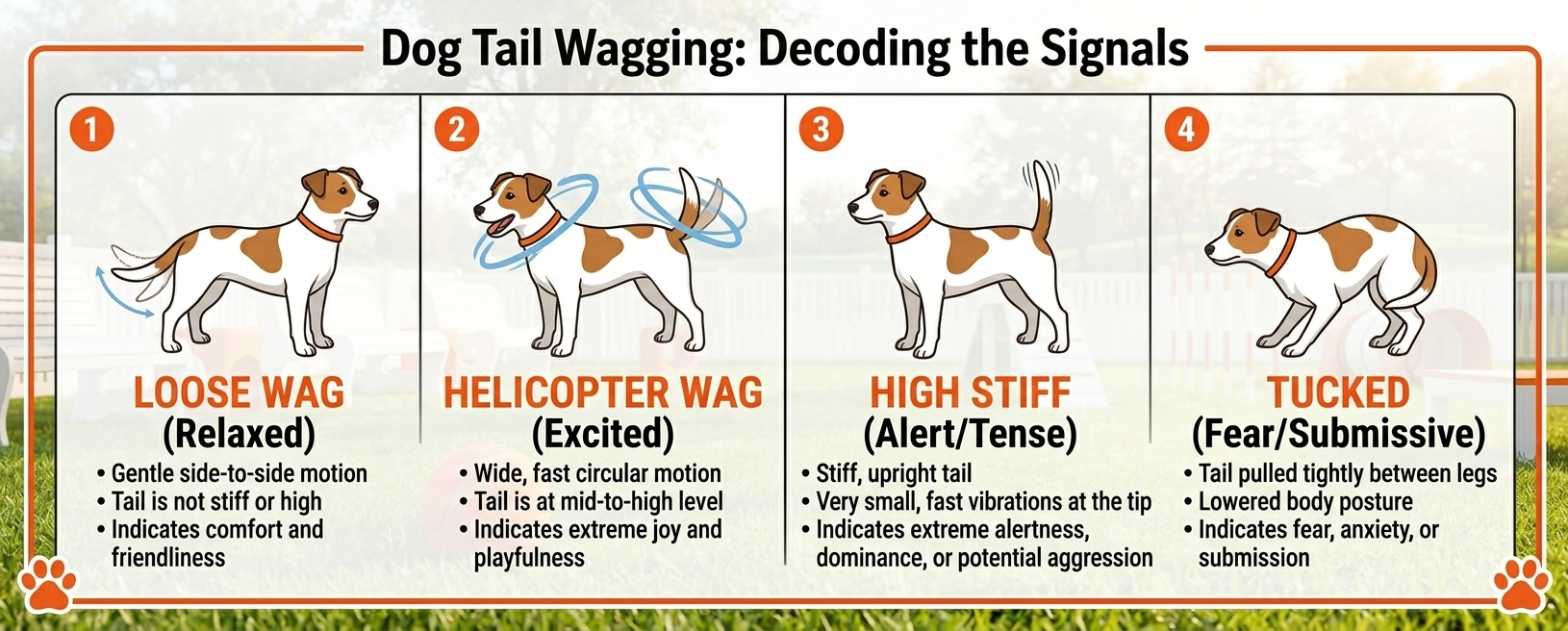
A wagging tail signals emotional arousal, not happiness. The dog is “switched on,” and the rest of the body tells you whether that’s joy or tension.
- Loose, wide wag with a wiggly hind end: relaxed and friendly.
- Helicopter wag (the tail circles): about as happy as a dog gets.
- High, stiff, fast flicking: alert, tense, possibly about to escalate.
- Low or tucked tail: fear, worry, or appeasement.
Direction adds a clue. A 2007 study in Current Biology found dogs tend to wag more to the right when approaching something positive, like their owner, and more to the left when facing something they perceive as negative.
It’s a fascinating detail, though I wouldn’t base a safety decision on it.
Dog ear positions meaning: forward, neutral, or pinned
Ear position shows where a dog’s attention is and how comfortable it feels. Floppy ears move too; watch the base of the ear, not the tip.
- Neutral or slightly to the side: relaxed.
- Pricked forward: interested, alert, focused on something.
- Pinned flat against the head: stressed, fearful, or overwhelmed, especially paired with a tucked tail.
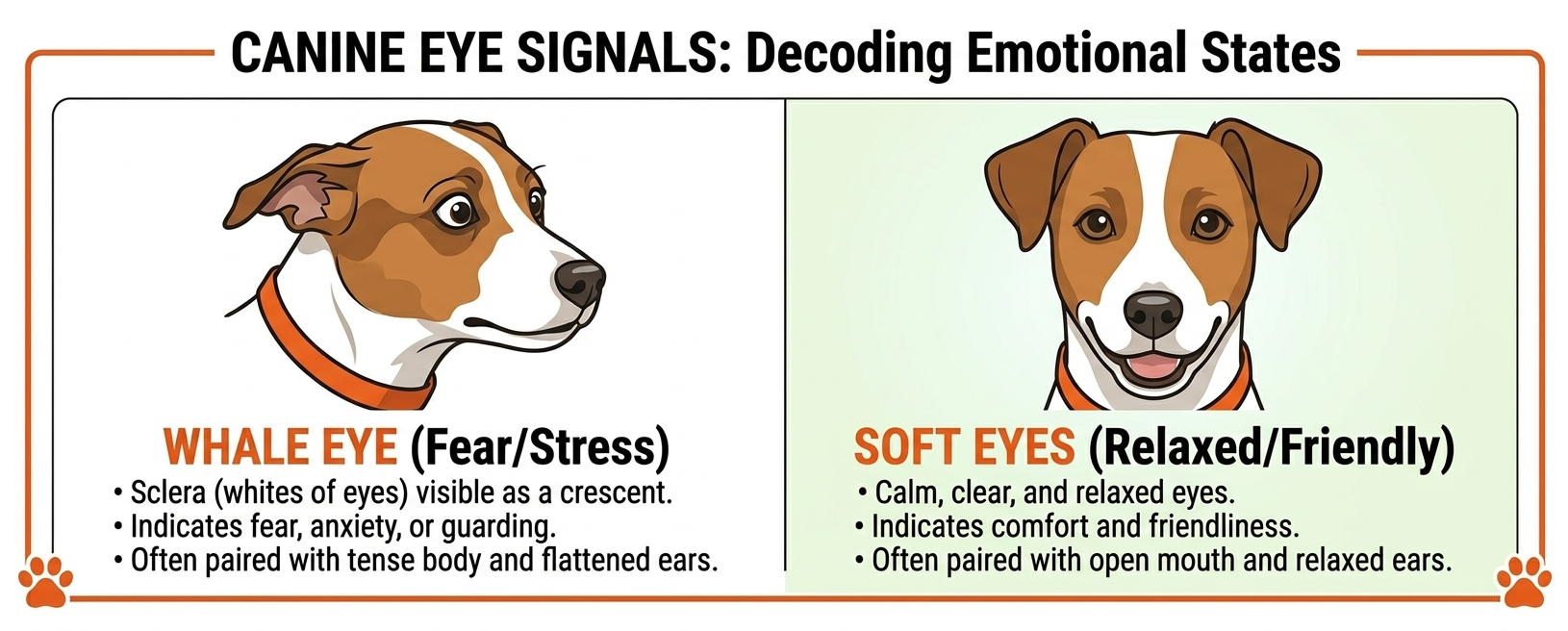
What is whale eye in dogs?
Whale eye is when a dog shows the white of its eye (the sclera) in a half-moon shape, usually because its head is turned away while its eyes stay locked on something. It’s one of the most reliable dog anxiety signs there is.
Think of it like a person leaning away from a conversation while still watching the speaker. The body says “I’d like to leave,” and the eyes say “but I’m not taking my eyes off you.”
The ASPCA’s shelter guidance adds two more eye cues worth knowing:
- Soft, squinty, almond-shaped eyes: comfort and trust.
- A hard, unblinking stare with a frozen body: a threat display. Don’t stare back.
- Suddenly dilated, glassy pupils: fear or high arousal, unless the dog is clearly mid-play.
What are calming signals in dogs?
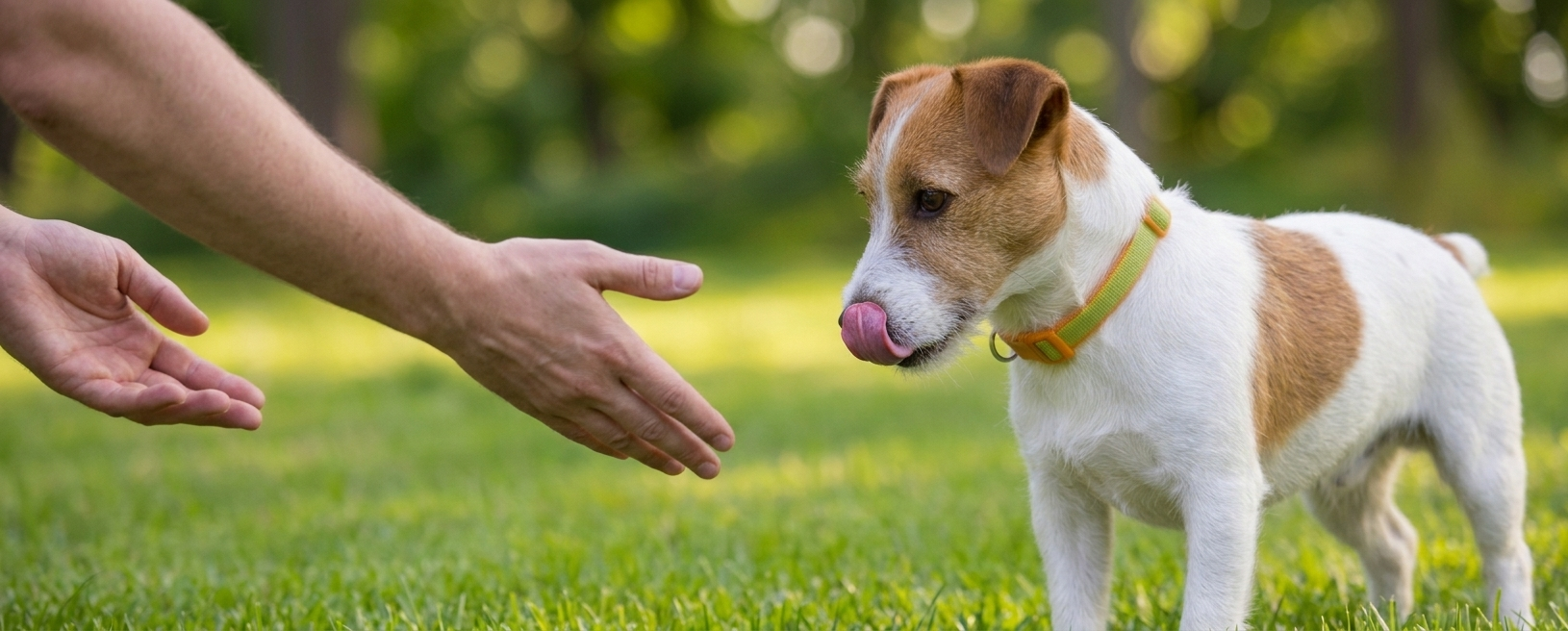
Calming signals are small, polite behaviors dogs use to calm themselves and defuse tension with others. Norwegian trainer Turid Rugaas popularized the term in her book On Talking Terms With Dogs: Calming Signals.
Common calming signals in dogs include:
- Dog lip licking: a quick tongue flick when no food is around.
- Yawning: the usual dog yawning meaning, outside of bedtime, is mild stress.
- Looking or turning away from a person or dog approaching head-on.
- Sniffing the ground suddenly in the middle of a greeting.
- Shaking off like a wet dog when the dog is completely dry.
Turid Rugaas even suggests yawning back at your dog during tense moments, like a vet visit. Don’t be surprised if it yawns too.
Which dog stress signals should you never ignore?
Dog stress signals stack up in layers, and the early ones are quiet. Catch them early and you rarely see the loud ones.
- Whale eye, lip licking, and yawning
- Panting when it isn’t hot
- A low body, tucked tail, and weight shifted backward
- Pacing, trembling, or drooling with no food present
- Raised hackles (piloerection), which signals arousal, not always aggression
- Sweaty paw prints on the floor
Storms and alone time trigger many of these.
I cover storms in my guide on calming a dog afraid of thunderstorms.
For alone time, read how structured daycare reduces separation anxiety.
What are the signs of a happy dog?
The signs of a happy dog are looseness and movement. A relaxed dog looks soft, almost wiggly, with nothing held stiff.
- Soft eyes and a smooth forehead
- A slightly open mouth with a relaxed pant
- Ears in their natural position
- A tail wagging wide at or just below spine height
- Bouncy, exaggerated movement during play
The dog play bow is the clearest invitation in canine communication. The dog drops its chest to the ground, keeps its rear up, and says “everything after this is a game.” I watch for play bows constantly in daycare; they reset rough play before it tips over.
Dog growling meaning: why a growl is a gift
The usual dog growling meaning is simple: “back off, I’m uncomfortable.” It’s communication, and honestly, it’s the dog being polite.
I’d never punish a growl. Punishing it doesn’t remove the fear underneath; it only removes the warning. That’s how people end up with a dog that “bit out of nowhere.”
Warnings tend to escalate in a predictable ladder: freezing, a hard stare, a lip curl, a growl, an air snap, then a bite. Play growling is the exception, and it always comes with a loose body and play bows.
This matters for families. The AVMA estimates about 4.5 million people are bitten by dogs each year in the United States, and children are among the most common victims. Most bites follow signals someone missed.
Dog body language chart: what each signal usually means
Use this chart as a quick reference, then confirm with the rest of the dog.
| Body part | Relaxed / happy | Alert / aroused | Stressed / fearful | Warning |
|---|---|---|---|---|
| Tail | Loose, wide wag at spine height | Raised, slight wag | Low or tucked | High, stiff, fast flicking |
| Ears | Natural position | Pricked forward | Pinned back | Forward or pinned, with hard stare |
| Eyes | Soft, squinty | Wide, focused | Whale eye, dilated pupils | Hard, unblinking stare |
| Mouth | Open, relaxed pant | Closed, no tension | Lip licking, yawning, tight lips | Lip curl, teeth shown, growl |
| Body | Loose, wiggly, play bow | Weight centered, still | Low, weight back, trembling | Stiff, weight forward, raised hackles |
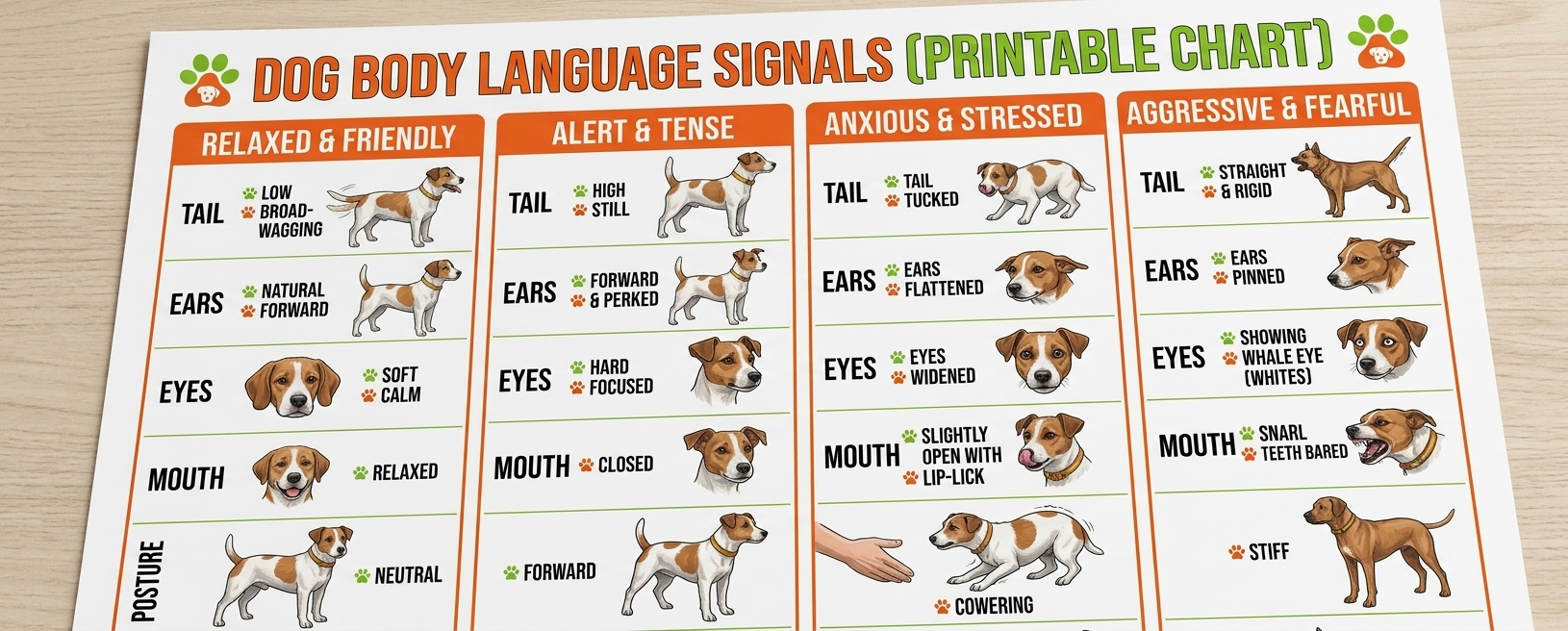
Want to see these signals managed safely in a group? Every dog at The Dog Patch dog daycare starts with a playgroup compatibility evaluation. You’re welcome to book a tour and watch a playgroup in action.
How I use understanding dog body language in daycare playgroups
Understanding dog body language is the core skill of safe group play. Before any dog joins a playgroup, it goes through an evaluation where the staff watches how it greets, plays, and handles being interrupted.
During a daycare evaluation, a dog showed signs of nervousness and avoided other dogs during initial introductions. The staff provided a calm space and gradually introduced the dog to a smaller, compatible playgroup. With gentle supervision and time to adjust, the dog had more opportunities to feel comfortable around other dogs.
The same skill helps puppies. Early, positive exposure teaches a young dog that the world is safe, which is the heart of this step by step puppy socialization guide.
It also shapes the safety protocols every daycare should follow.
One honest limit: body language can’t tell you whether a dog is in pain. A dog that suddenly stiffens, cowers, or stops playing may be hurting, not anxious. Call your vet first, and see a certified veterinary behaviorist if fear or aggression keeps escalating.
Frequently asked questions about dog body language
How can I tell if my dog is stressed?
Look for a cluster of signals rather than one. Lip licking, yawning when not tired, whale eye, a tucked tail, and looking away are the common early signs. Panting without heat, pacing, and trembling come later. If you see three or more together, give your dog space and remove the trigger if you can.
Does a wagging tail always mean a dog is happy?
No. A wag only means the dog is emotionally aroused. A loose, wide wag with a wiggly body is friendly.
A high, stiff, fast wag can signal tension or a coming warning. Always check the ears, eyes, and body before you assume a wagging dog wants to be petted.
Why does my dog yawn when it’s not tired?
A daytime yawn is often a calming signal. Dogs yawn to settle themselves when something feels uncertain, like a car ride, a vet exam table, or a stranger leaning over them. Contagious yawning happens too, so a yawn right after yours may just be your dog catching it.
What does it mean when a dog licks its lips?
Outside of mealtime, a quick lip lick usually means mild stress or appeasement. It’s a dog’s way of saying “I’m not a threat.” You’ll often see it during hugs, close face contact, or when a dog is being scolded. Repeated licking with drooling can also point to nausea, so mention it to your vet.
Is a play bow always friendly?
Almost always. A play bow invites a game and signals that the rough play that follows is meant in fun. The exception is a dog that stretches into a bow position repeatedly without play, which can indicate abdominal discomfort. If that comes with pacing or dry heaving, treat it as a veterinary emergency.
Do raised hackles mean a dog is aggressive?
Not necessarily. Raised hackles, called piloerection, are an involuntary arousal response, much like goosebumps in people. A dog may be excited, startled, nervous, or defensive. Read the hackles alongside the tail, eyes, and body weight to know which one you’re looking at.
The bottom line
A dog’s posture is a full sentence, never one word. Learn your dog’s baseline, scan the five zones, and respect the quiet signals before they turn loud. Your dog has been talking the whole time; now you can listen.
If you’re in Brandon, Riverview, or the South Shore area and want a team that reads every signal, reach out to The Dog Patch to schedule an evaluation.
Share this article

From the blog
Keep reading
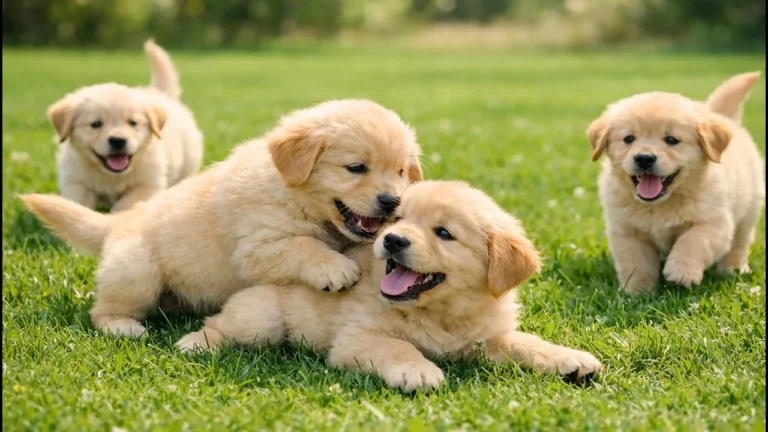
How to Socialize a Puppy: A Step-by-Step Guide
What You Need to Know Puppy socialization means giving your puppy safe, positive experiences with people, dogs, sounds, surfaces, and handling while…

Florida Plants Toxic to Dogs: What Every Pet Owner Should Know
What you need to know: Florida plants toxic to dogs are not rare backyard oddities. They line driveways in Brandon, fill medians…
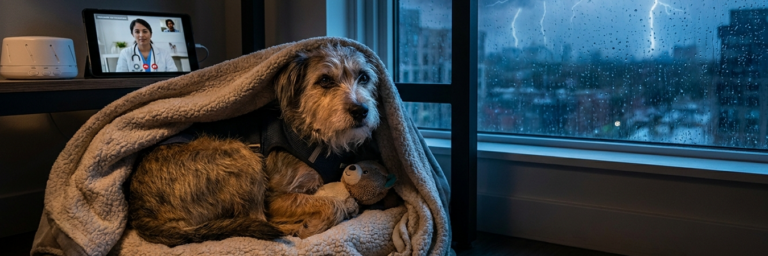
Dog Afraid of Thunderstorms? How to Calm Storm Anxiety in Dogs
Florida weather can change quickly, bringing dark skies, heavy rain, strong winds, lightning, and loud thunder. While some dogs remain relaxed during…