
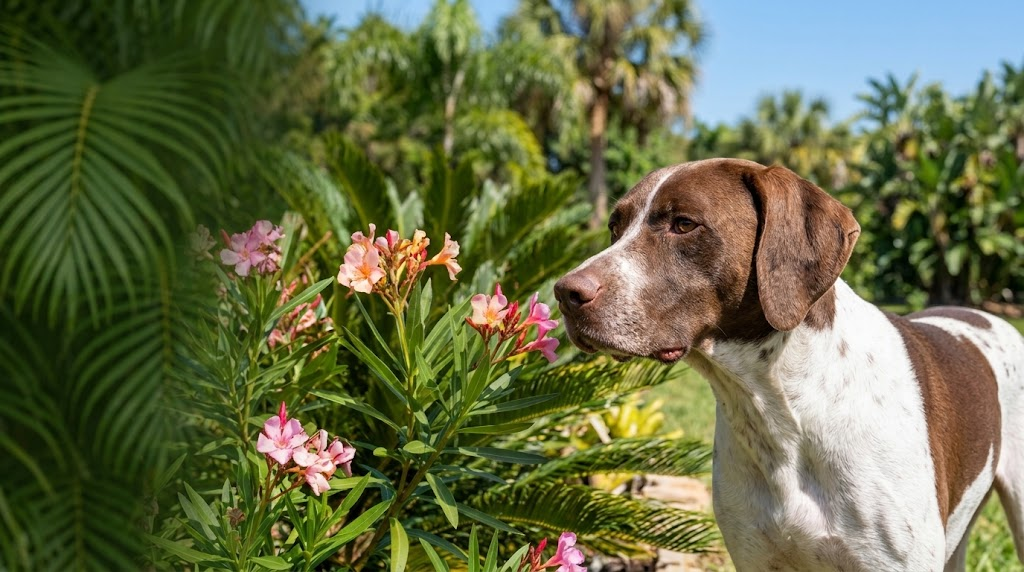
Florida Plants Toxic to Dogs: What Every Pet Owner Should Know
Summarize with AI
On this page 6 sections
What you need to know:
- Sago palm (Cycas revoluta) is the most dangerous of the Florida plants toxic to dogs. All parts are poisonous, and the seeds carry the most toxin.
- In one veterinary study of 34 dogs, half died or were euthanized after cycad poisoning.
- Oleander, lantana, coontie, golden dewdrop and azalea are other common poisonous plants for dogs in Florida yards.
- Vomiting is usually the first sign. Sago signs can appear within hours or take days.
- If your dog eats a toxic plant, call your vet or the Pet Poison Helpline (855-764-7661) right away, even if your dog seems fine.
Florida plants toxic to dogs are not rare backyard oddities. They line driveways in Brandon, fill medians in Riverview, and sit in pots by front doors across Hillsborough County.
We see a lot of curious noses at The Dog Patch. Dog eating plants is normal, especially for puppies. The problem is that a few of Florida’s favorite ornamentals can turn one nibble into an emergency vet visit.
This guide is general safety information, not veterinary advice. If you think your dog ate something toxic, contact your veterinarian now.
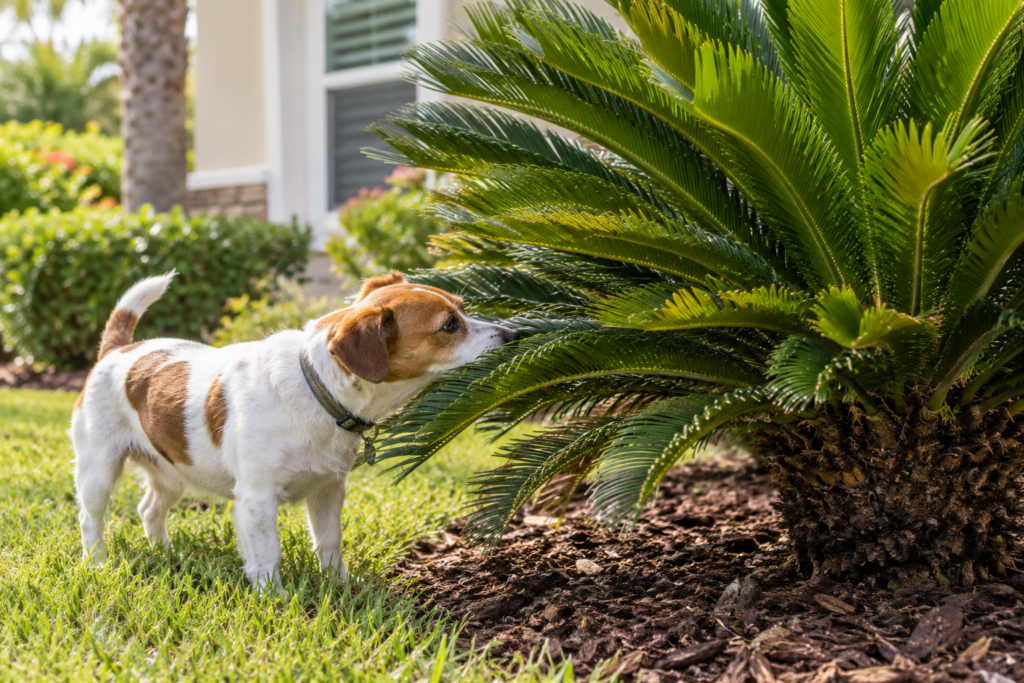
Which Florida plants are toxic to dogs?
The most dangerous toxic plants for dogs in Florida are sago palm, coontie, oleander, lantana, golden dewdrop and azalea. Most are popular because they shrug off heat and drought. UF/IFAS Extension notes these plants are used widely in Florida landscapes and are harmful if eaten.
| Plant | Where you’ll see it | Most toxic part | Main danger to dogs |
|---|---|---|---|
| Sago palm | Front yards, medians, pots | Seeds | Liver failure |
| Coontie (native cycad) | Native and xeriscape beds | Seeds | Liver failure |
| Oleander | Hedges, roadsides | Every part | Heart rhythm problems |
| Lantana | Butterfly gardens | Unripe berries | Liver damage |
| Golden dewdrop | Shrub borders | Berries and leaves | Seizures |
| Azalea | Shady beds | Every part | Heart and nerve effects |
| Hydrangea | Flower beds | Leaves and flowers | Stomach upset |
Use this table as your short list of Florida poisonous plants for a yard walk. It isn’t complete, so check the full UF/IFAS page too.
Heat is the other big yard risk here. Our summer safety tips for dogs in Brandon cover that side.
Why is sago palm toxic to dogs?
Sago palm is toxic to dogs because it contains cycasin, a compound that attacks the liver. It isn’t a true palm. It’s a cycad, an ancient seed plant that just looks like a small palm tree.
Every part is poisonous, but the seeds are the worst. They’re bright orange, about walnut size, and easy for a dog to treat like a toy. A veterinarian quoted in Pensacola Magazine warned that one seed can kill a dog.
Here’s the hard truth about sago palm poisoning in dogs. In a study of 34 dogs with confirmed cycad poisoning, 17 died or were euthanized. The paper also cites ASPCA Animal Poison Control Center data showing a 32% death rate.
We’d pull a sago out of any yard a dog uses. Fencing helps, but seeds drop and roll.
How fast does sago palm poisoning show up?
Signs can start within 12 hours, according to UF/IFAS. Some dogs look fine for a day or more before liver damage shows. That delay is the trap. A dog that seems normal at bedtime can be very sick two days later.
Is oleander poisonous to dogs?
Yes, oleander is poisonous to dogs, and every part of the shrub is toxic. It contains cardiac glycosides, compounds that disrupt the heart’s rhythm. Foxglove contains the same family of compounds.
Picture a drummer who suddenly loses the beat. Cardiac glycosides do that to the heart. Signs include drooling, vomiting, weakness and an irregular heartbeat. Pruned branches left on the lawn are a common risk, so bag clippings right away.
What are the dog poisoning symptoms to watch for?
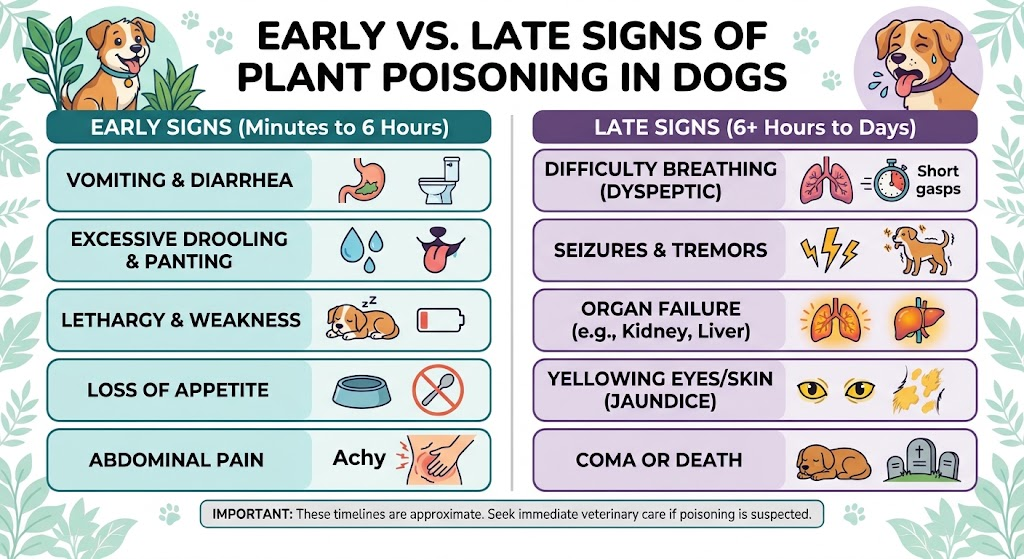
The most common dog poisoning symptoms after eating a toxic plant are stomach and gut signs. Some plants then affect the liver, heart or nerves. Watch for:
- Vomiting in dogs: often the first sign, sometimes with blood
- Diarrhea: may be dark or bloody after cycads
- Drooling or pawing at the mouth: common with irritating plants
- Weakness or wobbling: can point to heart or nerve effects
- Seizures or collapse: always an emergency
Vomiting alone doesn’t prove poisoning. If you saw your dog chewing a plant, though, treat it as poisoning until a vet says otherwise.
What to do if your dog eats a plant
If your dog eats a plant you think is toxic, get help before symptoms start. Follow these steps:
- Move your dog away and remove any plant pieces left in the mouth.
- Call your vet or a pet poison helpline. The Pet Poison Helpline is 855-764-7661. The ASPCA Animal Poison Control Center is 888-426-4435.
- Don’t make your dog vomit at home unless a vet or poison expert tells you to.
- Bring a photo or a piece of the plant so the vet can identify it.
- Go in even if your dog looks fine. With cycads, early treatment gives the best odds.
Poison lines charge a fee. The Pet Poison Helpline FAQ lists $89 per incident, including follow-up calls with your vet. AAHA reported the ASPCA line charges $95.
Leaving town soon? Ask any boarding facility what grows in its play yards. It’s on our list of dog daycare safety protocols in Brandon. At The Dog Patch, safety isn’t just a checklist, it’s daily practice. Before opening our Brandon play yards each morning, our staff conducts a thorough grounds check to ensure every play area is completely free of toxic plants, mushrooms, and hazardous debris. For extra peace of mind, we maintain a strictly dog-safe landscape design,using non-toxic flora like marigolds and synthetic turf in high-traffic zones,so your pup can run, sniff, and play without any hidden risks.
How do you build pet safe landscaping in Florida?
Pet safe landscaping starts with removing the worst offenders. Then choose plants the ASPCA lists as non-toxic. For pet safe plants in Florida with a tropical look, try these swaps:
- Areca palm (Dypsis lutescens): feathery fronds, listed non-toxic by the ASPCA
- Parlor and bamboo palms (Chamaedorea): good shade and patio picks
- Ponytail palm (Beaucarnea recurvata): drought tough and pot friendly
One warning. UF/IFAS suggests some sago alternatives, like chestnut dioon, because they resist scale insects. They’re still cycads, so they aren’t a dog-safe swap.
Wondering “is it safe for dogs?” about a new plant? Search its scientific name in the ASPCA plant database, since common names get reused.
Still stumped? Your local UF/IFAS Extension office can identify a mystery plant.
Frequently asked questions
Can one sago palm seed kill a dog?
Yes, it can. Veterinarians warn that a single seed may cause fatal liver failure. The seeds hold the most cycasin in the plant.
Not every dog that eats one dies, but nobody can predict the dose. Treat any seed ingestion as an emergency and call your vet right away.
How long after eating a toxic plant will a dog show symptoms?
It depends on the plant. Irritating plants often cause drooling or vomiting within a few hours. Oleander can affect the heart within hours too.
Sago signs can start within 12 hours, but liver damage may not be obvious for a day or two. Because timing varies, call for advice as soon as you know your dog ate a plant.
Are Florida poisonous plants a risk when dogs board?
They can be, so it’s worth asking. A good daycare or boarding facility keeps toxic plants out of play yards and supervises dogs outdoors.
Ask staff directly what grows in the yard. You can see how our dog daycare in Brandon works, or book a tour to check the space yourself.
Should you give a dog hydrogen peroxide after it eats a plant?
Not unless a vet or poison expert tells you to. Making a dog vomit isn’t safe in every case.
The right call depends on the plant, the timing and your dog’s health. Some vets induce vomiting within about four hours of sago ingestion, but that’s their decision. Call first, then act.
Bottom line
Sago palm, coontie and oleander are the Florida plants toxic to dogs that deserve the most respect. Swap them for ASPCA-listed safe plants where you can. Learn the early signs, and save the poison helpline number in your phone today.
New to Florida? Pair this with our hurricane preparedness checklist for dogs. Questions about our facility? Get in touch with The Dog Patch.
Share this article

From the blog
Keep reading

Dog Body Language: What Your Dog Is Trying to Tell You
Learn dog body language: tail wags, ear positions, whale eye, calming signals, and stress signs, plus a free chart. From a Brandon,…

How to Socialize a Puppy: A Step-by-Step Guide
What You Need to Know Puppy socialization means giving your puppy safe, positive experiences with people, dogs, sounds, surfaces, and handling while…
Dog Afraid of Thunderstorms? How to Calm Storm Anxiety in Dogs
Florida weather can change quickly, bringing dark skies, heavy rain, strong winds, lightning, and loud thunder. While some dogs remain relaxed during…