
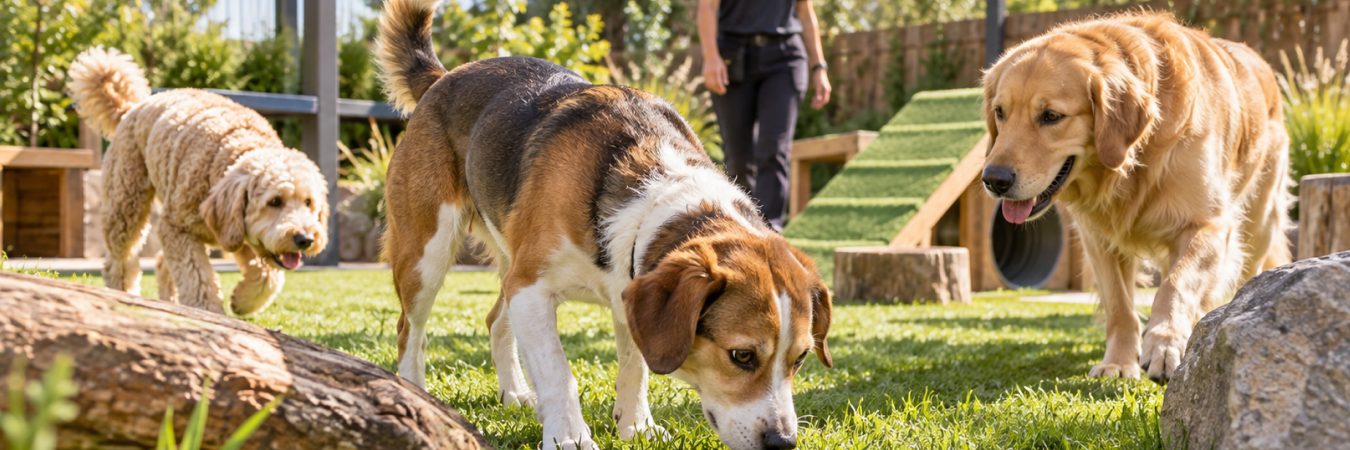
Dog Daycare Service for Curious Dogs That Love Exploring New Environments
Summarize with AI
On this page 18 sections
- Why Do Some Dogs Love Exploring New Environments?
- How a Dog Daycare Service Can Support Curious Dogs
- 1. New Scents Give Dogs Something to Investigate
- 2. Different Spaces Can Add Variety to the Day
- 3. Exploration Should Be Supervised
- 4. New Experiences Can Provide Mental Stimulation
- 5. Social Interaction Can Make Exploration More Interesting
- 6. Rest Is Still Important for Curious Dogs
- 7. Outdoor Exploration Can Be Especially Appealing
- 8. Exploration Does Not Have to Mean Constant Change
- Signs Your Dog Is Enjoying Exploration
- How to Prepare an Exploratory Dog for Daycare
- A Practical Example From The Dog Patch
- What Should You Look for When Choosing a Dog Daycare Service?
- Can a Dog Daycare Service Replace Walks and Home Enrichment?
- Is a Dog Daycare Service Right for an Exploratory Dog?
- Conclusion
- Frequently Asked Questions
Some dogs are happiest when they have something new to discover. They want to sniff unfamiliar smells, investigate different spaces, meet new people, observe other dogs, and explore their surroundings. For these curious dogs, staying in the same environment every day can sometimes leave them looking for more stimulation.
A dog daycare service can provide an opportunity for dogs that enjoy exploration to experience a structured environment with new sights, sounds, smells, activities, and social experiences. When these experiences are introduced thoughtfully, daycare can offer more than physical exercise. It can give curious dogs opportunities to use their senses, interact with compatible dogs, participate in enrichment, and enjoy supervised activities.
However, introducing a dog to a new environment should not mean overwhelming them with constant activity. Dogs have individual personalities and comfort levels. A good daycare experience should balance exploration with supervision, social interaction, enrichment, and rest.
For pet parents considering daycare for an adventurous or curious dog, understanding how a structured environment can support exploration is an important first step.
Why Do Some Dogs Love Exploring New Environments?
Dogs experience the world differently from humans. Their sense of smell plays a major role in how they gather information about their surroundings. A new room, outdoor area, toy, person, or dog can provide a collection of unfamiliar scents and sounds that naturally attract a curious dog.
You may notice your dog showing this interest when you visit a new park, walk a different route, enter a pet-friendly store, or travel somewhere unfamiliar. Instead of simply walking from one point to another, your dog may stop frequently to sniff, look around, and investigate.
This behavior is not necessarily about being hyperactive. For many dogs, exploration is a form of engagement.
A curious dog may enjoy:
- Sniffing new areas
- Investigating different surfaces
- Exploring outdoor spaces
- Meeting compatible dogs
- Discovering new toys
- Searching for hidden treats
- Observing unfamiliar sights and sounds
- Participating in new activities
- Moving between different areas under supervision
Allowing dogs appropriate opportunities to investigate their environment can provide mental enrichment. The American Kennel Club notes that sniffing gives dogs opportunities to gather information about their surroundings and can provide mental stimulation.
How a Dog Daycare Service Can Support Curious Dogs
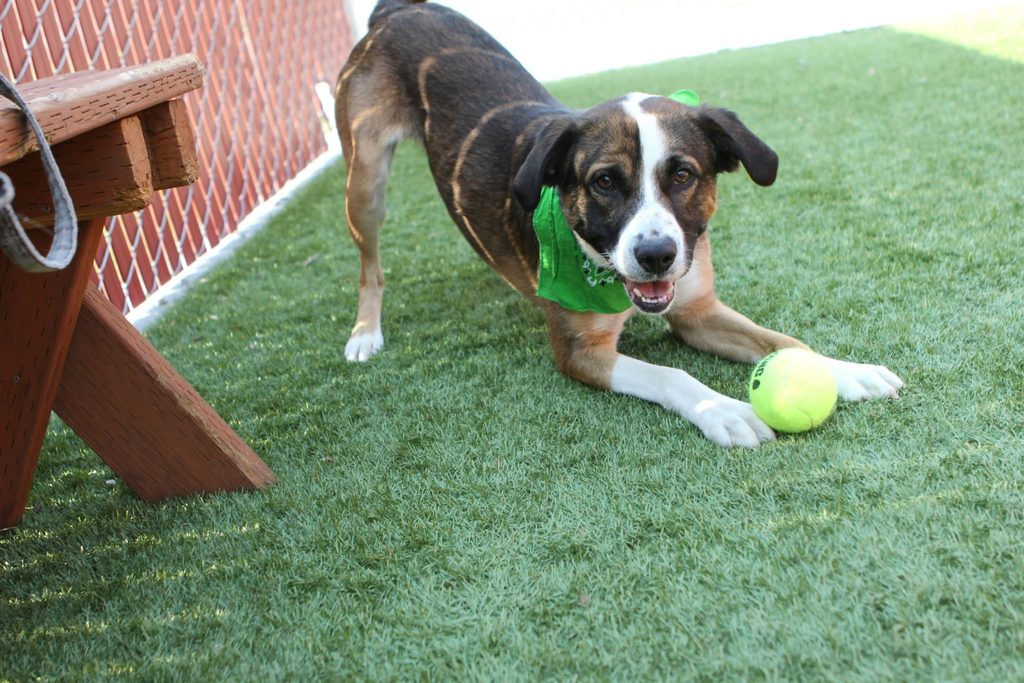
A daycare environment can give an exploratory dog more variety than they may experience during a typical day at home.
This does not mean a daycare should constantly introduce new experiences. Instead, a structured program can provide different forms of stimulation within a familiar and supervised routine.
For example, a dog might have an opportunity to:
- Arrive and become comfortable in the environment
- Interact with compatible dogs
- Explore an appropriate play area
- Participate in enrichment
- Spend time outdoors
- Take a scheduled rest period
- Return to supervised activities
This type of routine gives dogs both variety and predictability.
That balance matters. A dog may love exploring but still need breaks when the environment becomes busy or exciting.
1. New Scents Give Dogs Something to Investigate
One of the biggest attractions of a new environment for dogs is scent.
Humans tend to notice what a place looks like first. Dogs gather much more information through their noses. A new location may contain scents from other dogs, people, toys, outdoor areas, cleaning products, food, plants, and many other sources.
For an exploratory dog, these scents can create opportunities for investigation.
Scent-based exploration can also provide mental engagement. Instead of simply moving their body, dogs are actively processing information from their surroundings.
This is one reason pet parents should not assume that every useful daycare activity needs to involve running or chasing.
Sometimes allowing a dog to stop, sniff, investigate, and move at their own comfortable pace can be valuable enrichment.
At home, you can support this natural behavior with simple activities such as supervised sniffing walks, treat searches, or food puzzles. The goal is to give your dog appropriate opportunities to use their natural abilities.
2. Different Spaces Can Add Variety to the Day
Dogs that enjoy exploring may appreciate having access to different appropriate areas during their daycare experience.
A well-organized facility may include indoor areas, outdoor spaces, play areas, and quieter places for rest.
Different environments can provide different sensory experiences.
An indoor area may offer:
- Familiar play equipment
- Toys
- Other dogs
- Different surfaces
- New smells
- Human interaction
An outdoor area may provide:
- Fresh air
- Natural scents
- Additional room to move
- Different sounds
- Opportunities for supervised exploration
At The Dog Patch, the daycare program includes climate-controlled indoor play and outside space. Dogs that pass the Playgroup Compatibility Evaluation can participate in supervised activities, enrichment games and toys, open play, and outside play.
For an adventurous dog, this variety can make the day more interesting while still keeping the experience organized.
3. Exploration Should Be Supervised
Exploration is beneficial when it is appropriate and safe.
A curious dog may want to investigate everything around them, but that does not mean they should have unrestricted access to every environment or every dog.
Supervision is especially important in group daycare.
Dogs have different play styles, energy levels, communication signals, and comfort levels. A dog that enjoys exploring may quickly approach another dog, while that dog may prefer more personal space.
This is why a professional supervised dog daycare environment should consider compatibility rather than simply allowing every dog to interact freely.
The Dog Patch evaluates dogs for playgroup compatibility and separates dogs into playgroups based on size and temperament. The facility also states that dog rooms are monitored by Paw Care Counselors.
This type of management can help make exploration more controlled and appropriate for the individual dog.
4. New Experiences Can Provide Mental Stimulation
Physical activity is only one part of a fulfilling day.
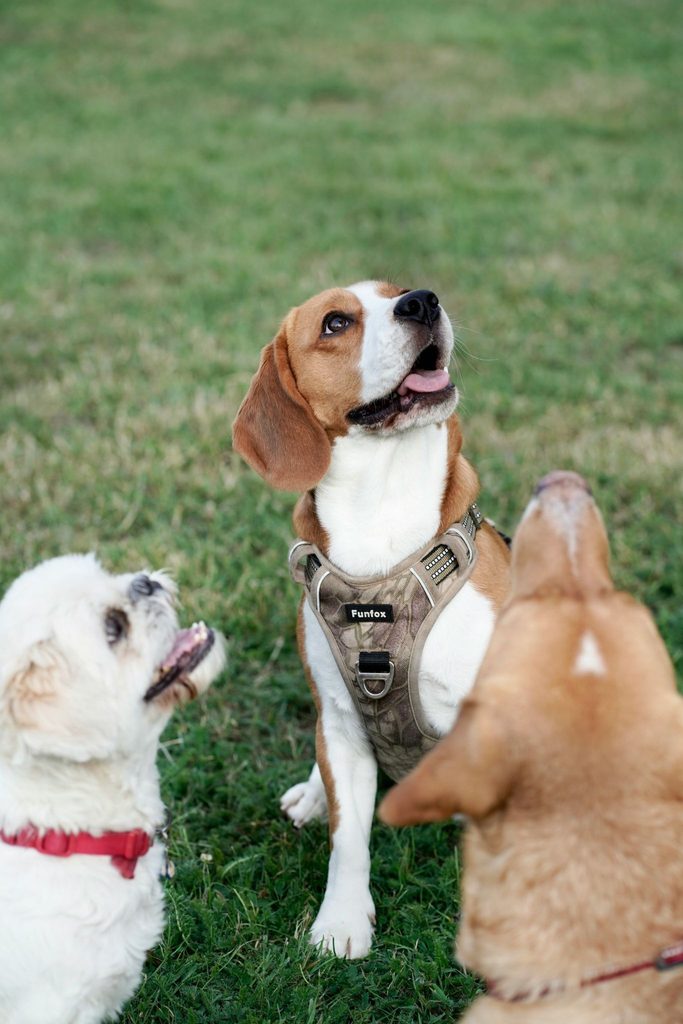
Dogs also need opportunities to think, investigate, solve simple problems, and use their natural senses.
A curious dog may become especially engaged when presented with an activity that requires investigation.
Examples can include:
- Searching for a toy
- Exploring a new play object
- Following an interesting scent
- Investigating an enrichment activity
- Learning a simple cue in a different setting
- Exploring an outdoor area
- Participating in supervised social activities
The American Kennel Club recommends enrichment activities that encourage dogs to use their senses and problem-solving abilities. Scent games, for example, can encourage dogs to search and investigate using their noses.
This is why dog mental stimulation should be considered alongside physical exercise when evaluating daycare activities.
5. Social Interaction Can Make Exploration More Interesting
Some dogs enjoy exploring new environments alongside other dogs.
A new play area becomes even more interesting when a compatible playmate is nearby. Dogs can observe each other, initiate play, follow one another, and learn social cues through appropriate interaction.
However, socialization does not mean every dog needs to interact with every other dog.
Some dogs prefer smaller groups or specific playmates. Others may need additional time to become comfortable.
Responsible daycare should therefore consider temperament and play style when creating groups.
At The Dog Patch, dogs are evaluated before joining daycare playgroups, and dogs are separated according to size and temperament.
This approach can be particularly useful for curious dogs because it allows exploration to happen within a managed social environment.
6. Rest Is Still Important for Curious Dogs
One common misconception about an adventurous dog is that they should be active all day.
That is not necessarily true.
Exploration, social interaction, physical activity, and new experiences can all be mentally stimulating. Dogs need time to settle and rest between activities.
A dog that is constantly moving from one exciting activity to another may become overly stimulated rather than comfortably engaged.
A balanced dog daycare service should therefore include opportunities for downtime.
The Dog Patch lists a daily nap period from approximately 12:00 p.m. to 1:45 p.m. as part of its daycare routine.
Scheduled rest can help create a healthier rhythm:
Explore → Play → Engage → Rest → Re-engage
This type of balance allows a curious dog to enjoy new experiences without making every moment of the day highly stimulating.
7. Outdoor Exploration Can Be Especially Appealing
Outdoor areas can offer dogs a completely different collection of sights, sounds, textures, and scents.
Grass, trees, weather, fresh air, and outdoor sounds can create an environment that is naturally interesting to dogs.
For a dog that loves exploring, supervised outdoor time may be a meaningful part of daycare.
However, outdoor activity should always take into account weather conditions, the dog’s health, energy level, and ability to settle.
This is particularly important in Florida, where hot and humid weather can affect outdoor activity.
Providing access to climate-controlled indoor areas can give dogs another option when outdoor conditions are uncomfortable.
The Dog Patch describes its daycare program as including both climate-controlled indoor play and outside space, allowing dogs to experience different environments throughout their day.
8. Exploration Does Not Have to Mean Constant Change
It is tempting to think that an adventurous dog needs a completely different environment every day.
That is not necessary.
Dogs can enjoy exploration within familiar surroundings.
For example, the same daycare facility can provide different experiences through:
- New enrichment toys
- Different play activities
- New compatible playmates
- Outdoor time
- Scent-based activities
- Different areas of the facility
- Short training exercises
- Changes in activity order
This approach gives dogs variety without removing the predictability that helps them feel comfortable.
A familiar facility can actually become a useful combination of novelty and routine.
Your dog may know where they are while still having something new to investigate.
Signs Your Dog Is Enjoying Exploration
Not every dog responds to new environments in the same way.
A dog that is comfortable may show relaxed, engaged behavior such as:
- Voluntarily investigating an area
- Sniffing and exploring
- Approaching activities willingly
- Playing appropriately
- Taking breaks independently
- Returning to activities after resting
- Showing relaxed body language
- Engaging with familiar staff
These observations should always be considered in context.
A dog that is constantly pacing, unable to settle, repeatedly attempting to escape, hiding, or showing other signs of discomfort may not be enjoying the environment.
Some behaviors can have multiple explanations, so persistent or concerning behavioral changes should be discussed with a qualified veterinarian or behavior professional.
The goal of daycare is not to expose dogs to as much stimulation as possible. The goal is to provide experiences that are appropriate for that individual dog.

How to Prepare an Exploratory Dog for Daycare
If your dog loves discovering new places, you may be excited to introduce them to daycare.
Preparation can make the transition easier.
Start With Short, Positive Experiences
If your dog is unfamiliar with daycare, consider beginning with an introductory visit or evaluation rather than expecting them to immediately feel comfortable.
Short, positive experiences can help your dog learn that the new environment is safe and predictable.
Keep Familiar Routines
Try to maintain familiar feeding and sleeping routines around daycare days.
Dogs often benefit from predictable schedules even when they enjoy new experiences.
Bring Relevant Information
Tell the daycare staff about your dog’s:
- Personality
- Play style
- Energy level
- Favorite activities
- Previous daycare experience
- Social preferences
- Any known sensitivities
This information can help staff understand your dog as an individual.
Do Not Force Interaction
A curious dog should still have the ability to move away from something they do not like.
New experiences should be introduced at a manageable pace. The American Kennel Club similarly emphasizes allowing dogs to experience new sights, smells, and sounds at an appropriate pace rather than forcing encounters.
A Practical Example From The Dog Patch
Consider a curious dog named Max whose favorite part of a walk is investigating every new smell and stopping to check out anything unfamiliar.
At home, Max becomes restless when his routine never changes. His owner decides to explore a structured daycare option where he can experience supervised social interaction and different activities during the day.
After completing the required compatibility evaluation, Max is placed into an appropriate playgroup. During his daycare day, he gets opportunities for supervised play, enrichment activities, outdoor time, and time to settle and rest.
Instead of spending the entire day running, Max experiences a combination of activities. He can investigate his surroundings, interact with compatible dogs, enjoy enrichment, and then take a break.
This example reflects how The Dog Patch structures daycare around socialization, stimulation, and rest rather than simply encouraging nonstop activity. The facility’s current daycare information states that dogs can enjoy enrichment games and toys, open play, outdoor play, and a scheduled nap period.
For a curious dog, this kind of balanced routine can make daycare an interesting part of the weekly schedule while still respecting the dog’s need for rest.
What Should You Look for When Choosing a Dog Daycare Service?
If your dog loves exploring, don’t choose a daycare simply because it advertises lots of activities.
Ask questions about how those activities are managed.
Before enrolling your dog, consider asking:
Does the facility evaluate new dogs?
A compatibility evaluation can help determine whether a dog is suited for group daycare and which playgroup may be appropriate.
How are dogs grouped?
Ask whether dogs are grouped according to factors such as size, temperament, energy level, and play style.
Is play actively supervised?
Staff should be able to observe interactions and respond when necessary.
Are rest periods included?
A balanced schedule should give dogs opportunities to settle rather than encouraging continuous activity.
Are there different types of enrichment?
Look for a variety of appropriate activities rather than only physical play.
Is there indoor and outdoor space?
Different environments can provide additional sensory variety, although outdoor activity should always be appropriate for the weather and individual dog.
What happens if a dog does not enjoy group play?
A reputable facility should have a clear process for dogs that are not compatible with group activities.
The Dog Patch states that dogs who are not playgroup compatible can receive individual play or solo care options, depending on the service.
Can a Dog Daycare Service Replace Walks and Home Enrichment?
Daycare should not necessarily replace every other form of activity.
Dogs can benefit from having different types of experiences throughout the week.
A daycare day may provide:
- Supervised social interaction
- Structured play
- Enrichment
- Outdoor time
- Rest
At home, you can continue providing:
- Sniff walks
- Basic training
- Puzzle toys
- Interactive play
- Calm bonding time
- Safe exploration
This variety can help prevent your dog’s routine from becoming repetitive.
For dogs that love exploration, small changes can make familiar activities more interesting. Even changing a walking route or allowing extra time for sniffing can give your dog opportunities to investigate their environment.
Is a Dog Daycare Service Right for an Exploratory Dog?
A dog daycare service can be a useful option for dogs that enjoy exploring, social interaction, and structured activities.
The important factor is not simply how adventurous your dog is. It is whether the daycare environment matches your dog’s individual temperament and needs.
A well-managed daycare experience should provide opportunities for exploration without turning the entire day into nonstop stimulation.
Look for a facility that values:
- Compatibility
- Supervision
- Mental enrichment
- Physical activity
- Social interaction
- Rest
- Individual temperament
- Safe environmental management
For curious dogs, daycare can provide a combination of familiarity and variety. Your dog can visit a consistent facility while still having opportunities to sniff, investigate, play, socialize, participate in enrichment, and enjoy different spaces.
The right balance allows exploration to become part of a structured routine rather than simply adding more activity.
Conclusion
Dogs that love exploring often thrive when they have appropriate opportunities to investigate the world around them. New scents, different spaces, enrichment activities, outdoor experiences, and compatible social interaction can all make a dog’s day more engaging.
A quality dog daycare service should do more than keep dogs occupied. It should provide a balanced environment where dogs can participate in supervised activities while also having time to rest and settle.
For an adventurous dog, the ideal daycare experience is not necessarily the one with the most activity. It is the one that understands the individual dog and provides appropriate opportunities for exploration, socialization, stimulation, and rest.
If you are considering daycare for your curious dog, ask how the facility evaluates temperament, manages playgroups, supervises activities, provides enrichment, and handles rest periods. These details can help you determine whether the environment is a good match for your dog’s personality.
Frequently Asked Questions
1. Is a dog daycare service good for dogs that love exploring?
Yes, it can be a good option for dogs that enjoy new sights, smells, activities, and appropriate social interaction. The daycare environment should still be supervised and structured around the individual dog’s temperament.
2. How does daycare provide mental stimulation for curious dogs?
Daycare can provide mental stimulation through new surroundings, enrichment activities, scent exploration, supervised social interaction, toys, outdoor experiences, and other appropriate activities.
3. Should dogs be allowed to explore all day at daycare?
No. Dogs need a balance between activity and rest. Continuous stimulation can be tiring or overwhelming, so scheduled or naturally occurring downtime is an important part of a balanced daycare routine.
4. How can I tell if my dog enjoys a new daycare environment?
Look for relaxed engagement, willingness to explore, appropriate interaction, interest in activities, and the ability to settle and rest. Signs of persistent discomfort or inability to settle should be discussed with the daycare provider and, when appropriate, a veterinarian or behavior professional.
5. What should I ask before choosing a dog daycare service?
Ask about compatibility evaluations, playgroup structure, supervision, enrichment activities, rest periods, indoor and outdoor areas, health requirements, and what the facility does if your dog is uncomfortable with group play.
Share this article

From the blog
Keep reading

Dog Body Language: What Your Dog Is Trying to Tell You
Learn dog body language: tail wags, ear positions, whale eye, calming signals, and stress signs, plus a free chart. From a Brandon,…

How to Socialize a Puppy: A Step-by-Step Guide
What You Need to Know Puppy socialization means giving your puppy safe, positive experiences with people, dogs, sounds, surfaces, and handling while…

Florida Plants Toxic to Dogs: What Every Pet Owner Should Know
What you need to know: Florida plants toxic to dogs are not rare backyard oddities. They line driveways in Brandon, fill medians…